

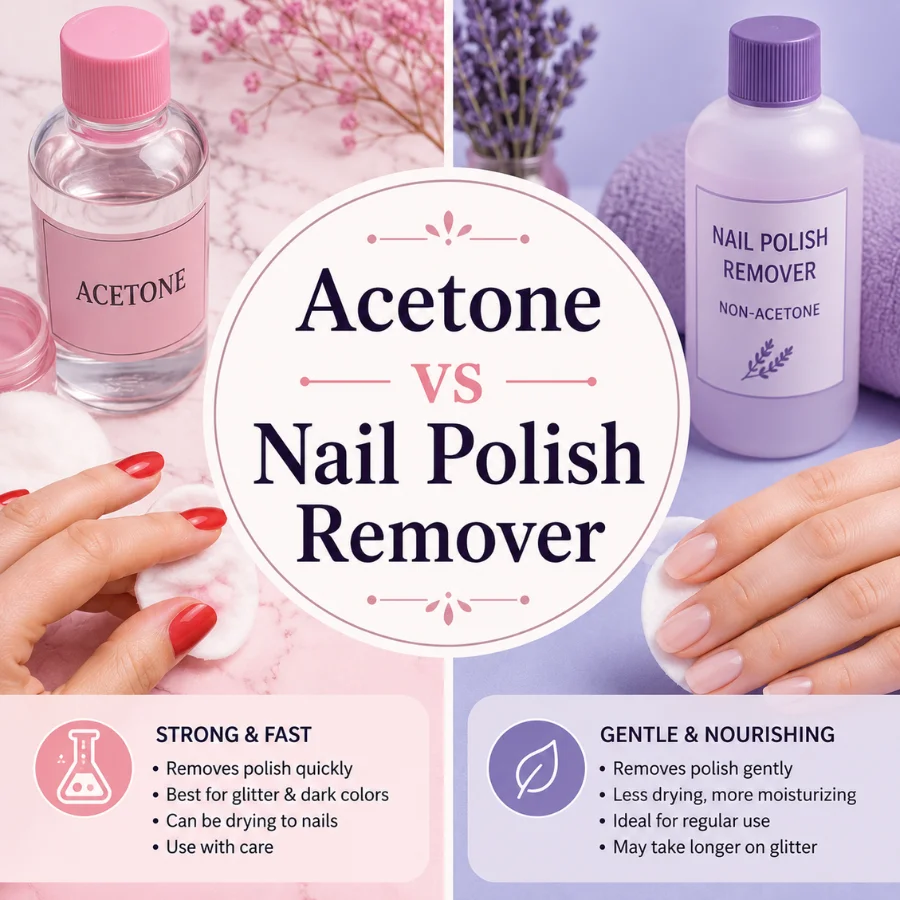
Acetone vs nail polish remover based on real nail care experience, discover key differences, pros & cons, and expert tips to choose the safest option in 2026.
Table of Contents
Quick Answer: Acetone and nail polish remover aren’t the same. Acetone removes polish quickly and effectively, while non-acetone removers are gentler on natural nails and skin. Understanding the difference can help you choose the best option for faster results, healthier nails, and safer nail care.
When it comes to removing nail polish, acetone and nail polish remover are the 2 most public choices. But which one is greatest for your nails?
Acetone is a powerful solvent that pull-out polish rapidly but can be harsh on nails, while non-acetone removers are merciful but less helpful. In this guide, we’ll break down the key changes to support you pick the correct product for your nails.
What is Acetone Nail Polish Remover?
Acetone nail polish remover is a durable liquid used to pull-out nail polish. It contains acetone, which breaks down polish rapidly. Acetone is great for take-out tough polish like gel or acrylics, but it can dry out your nails.
In 2026, acetone remains famous because it works fast and well. However, many persons are now using acetone-free removers to defend their nails from injury. Continually moisturize your nails after using acetone to keep them well.
Is Regular Nail Polish Remover 100% Acetone?
No, even nail polish remover is not continually 100% acetone. Maximum nail polish removers are made with a blend of acetone and additional components, like moisturizers or oils, to make them gentler on your nails.
While 100% acetone works quicker and is stronger, many removers are outlines to be milder to avoid drying out nails. In 2026, acetone-free pull out are also gaining popularity for being harmless and extra hydrating for nails.
Is Nail Polish Remover the Same as Acetone?
No, nail polish remover and acetone are not the same. While acetone is a durable solvent used in some removers, nail polish pulls out can also be made with gentler components, like isopropyl alcohol or oils.
In the Acetone vs Nail Polish Remover debate, acetone is faster at removing stubborn polish but can be drying. Nail polish removers with acetone changes are often less harsh and improved for sensitive nails.
Acetone vs Non-Acetone Removers
When comparing acetone vs nail polish remover, I’ve found acetone works faster, especially for gel or acrylic removal. But it can feel drying, so I use it carefully.
Non-acetone options are gentler and better for regular care. For quick, effective results when needed, you can consider SAVILAND Pure Acetone Nail Polish Remover Kit as a reliable option.
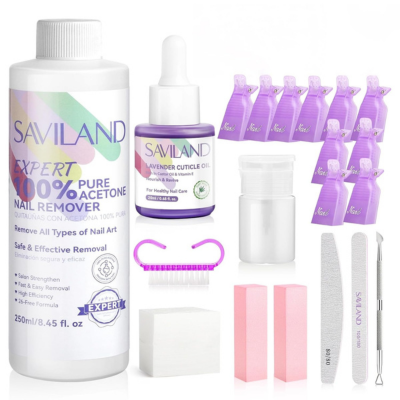
SAVILAND Pure Acetone Nail Polish Remover Kit: Gel Polish Remover with Professional Nail Polish Removal Tools Safe Gel Remover for Nails Fast & Easy Removal with Cuticle Oil Salon Home DIY 8.45 FLOz
Price : $19.99
Verified Seller | Fast Shipping | Medical-Grade
Need a fast acetone remover? Buy Now for quick and efficient results!
💡 Note: This post may contain affiliate links. If you purchase through these links, I may earn a small commission at no extra cost to you.
Is It Safe to Use 100% Acetone on Your Nails?
Using 100% acetone on your nails can be helpful for erase tough polish, but it can also be drying and sharp. In the Acetone vs Nail Polish Remover comparison, acetone works quicker but can strip away natural oils, main to breakable nails or irritation if used too often.
It’s important to moisturize your nails later and use acetone lightly, especially if you have sensitive or dry skin around your nails.
What is Acetone Nail Polish Remover Used For?
Acetone nail polish remover is mainly used for fast and powerfully removing nail polish. In the Acetone vs Nail Polish Remover dispute, acetone is unusually good at melting stubborn polish like gel or acrylics.
It’s also used to clean nails before smearing new polish or nail therapy. However, because it’s durable, it can dry out nails, so it’s essential to splash afterward to keep them fit.
If you’re dealing with issues like a Toenail Growing Under Toenail, it’s important to understand the best ways to handle nail health. Check out our detailed guide to learn more about treatment options and tips for healthy nails!
Can I Use Nail Polish Remover Instead of Acetone?
Yes, you can apply nail polish remover rather of acetone, but it depends on the category of remover. In the Acetone vs Nail Polish Remover balancing, greatest nail polish removers contain acetone or a smoother alternative.
While acetone is stronger and doing faster, non-acetone cleaners are milder and well for sensitive nails. If you’re observing for a gentler choice, a non-acetone remover is a countless choice for everyday use.
Can Nail Polish Remover Be Used to Remove Acrylic Nails?
Nail polish remover can be used to remove acrylic nails, but it’s not the maximum effective choice. In the Acetone vs Nail Polish Remover dispute, acetone is classically the well choice for removing acrylics because it breaks down the sticky and acrylic details more effectively.
Non-acetone removers may effort, but they take much lengthier and are less efficient. For top results, use acetone to remove acrylic nails carefully and quickly.
Is Acetone-Free Nail Polish Remover Better?
Acetone-free nail polish remover can be improved for those with complex nails or skin, as it is gentler and less drying. In the Acetone vs Nail Polish Remover parley, acetone-free choices are often chosen for even use, especially if you need to avoid the sharp effects of acetone on your nails.
However, acetone-free removers may take longer to remove stubborn polish. For fast and tough removals, acetone still works finest.
What About Natural Alternatives to Acetone?
Natural replacements to acetone include choices like vinegar, lemon juice, and baking soda, which can gently pull out nail polish. In the Acetone vs Nail Polish Remover balancing, these alternatives are harmless for those with sensitive skin or who want to avoid sharp compounds.
However, they may not be as effective or fast as acetone in removing difficult polish. For gentle, eco-friendly nail upkeep, natural removers are a great choice, but they require extra time and effort.
Show Me Nail Polish Removers Without Acetone
If you need gentler choices, many nail polish removers without acetone are available that still work well. In the Acetone vs Nail Polish Remover setting, non‑acetone methods often use elements like ethyl acetate, soy, or oils to remove polish while helping keep nails moisturized.
These removers are countless for natural nails or sensitive skin. Watch for brands that say “acetone‑free” on the label for a softer, less drying selection.
Final Thought
When deciding between acetone vs nail polish remover, it’s essential to consider your nail type and needs. Acetone is stronger and faster for tough polish, but can dry out your nails. Non-acetone removers are gentler and better for sensitive skin.
In 2026, many users are opting for acetone-free removers to maintain healthier nails. Choose wisely to keep your nails clean, healthy, and nourished.
FAQs
1. Is acetone better than non-acetone nail polish remover?
Acetone is stronger and works faster, making it better for stubborn polishes like gel and acrylics. Non-acetone removers are gentler, making them better for sensitive nails, but they may take longer.
2. Can I use nail polish remover to remove gel polish?
Yes, but acetone is usually recommended for removing gel polish as it dissolves the gel more effectively than non-acetone removers.
3. What are natural alternatives to acetone?
Natural alternatives like vinegar, lemon juice, and baking soda can help remove nail polish gently. These are ideal for sensitive skin but take longer than acetone-based removers.
4. Is it safe to use acetone on nails frequently?
Using acetone frequently can dry out your nails. It’s important to moisturize your nails afterward and use acetone sparingly to prevent damage.
5. Can non-acetone removers work on acrylic nails?
Non-acetone removers can be used to remove acrylic nails, but acetone is far more effective in breaking down acrylics and adhesive.
6. How can I prevent my nails from drying out after using acetone?
After using acetone, apply a nail moisturizer or cuticle oil to keep your nails hydrated and healthy.
7. Can I use acetone to remove regular nail polish?
Yes, acetone works effectively for removing regular nail polish, but it is harsher than non-acetone removers, so it’s best to use it for tougher polish.
Meet Ava
With over six years of hands-on expertise in nail care, lash artistry, and premium hair styling, I am dedicated to elevating beauty standards. Through my digital platform, NailBeautyZone, I analyze global beauty trends with a strict emphasis on product safety and hypoallergenic formulations.
My philosophy is uncompromising: if a product hasn’t been rigorously tested and personally trusted, it doesn’t earn my recommendation.









Leave a Reply