
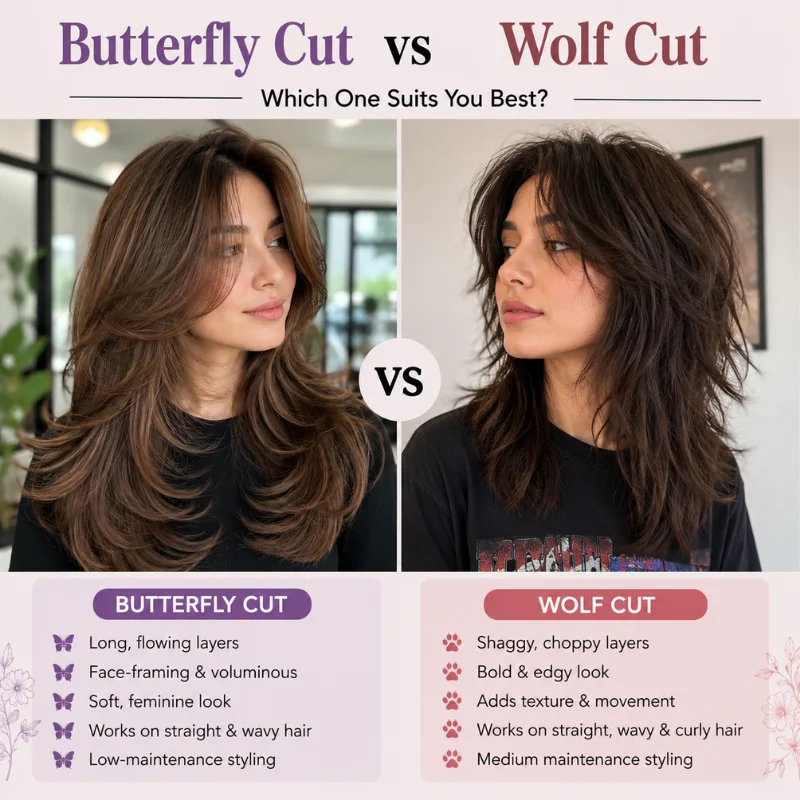
I tested both to save you from styling nightmares. Discover my raw butterfly cut vs wolf cut truth to see which truly flatters your face and texture in 2026.
Table of Contents
Quick Answer: The main difference between a wolf cut and a butterfly cut lies in the layering technique and final vibe. A butterfly cut uses soft, seamless face-framing layers to create a bouncy, 90s supermodel blowout look. A wolf cut relies on choppy, disconnected layers and heavy crown volume to deliver an edgy, lived-in modern shag.
I’ll admit it: what most blogs get wrong about the butterfly cut vs wolf cut debate is pretending both styles work for everyone. They absolutely do not. After analyzing countless layered hair trends and seeing the reality of the morning styling routine, I realized we need a brutally honest breakdown. I’ve tested these shapes, studied the grow-out phases, and seen what actually flatters different face contours.
If you are terrified of salon regret in 2026, keep reading. Let’s figure out which layered masterpiece actually belongs on your head.
Butterfly Cut vs Wolf Cut: The Main Difference
Your styling patience dictates your haircut. The fundamental difference in the butterfly cut vs wolf cut decision is how the layers connect.
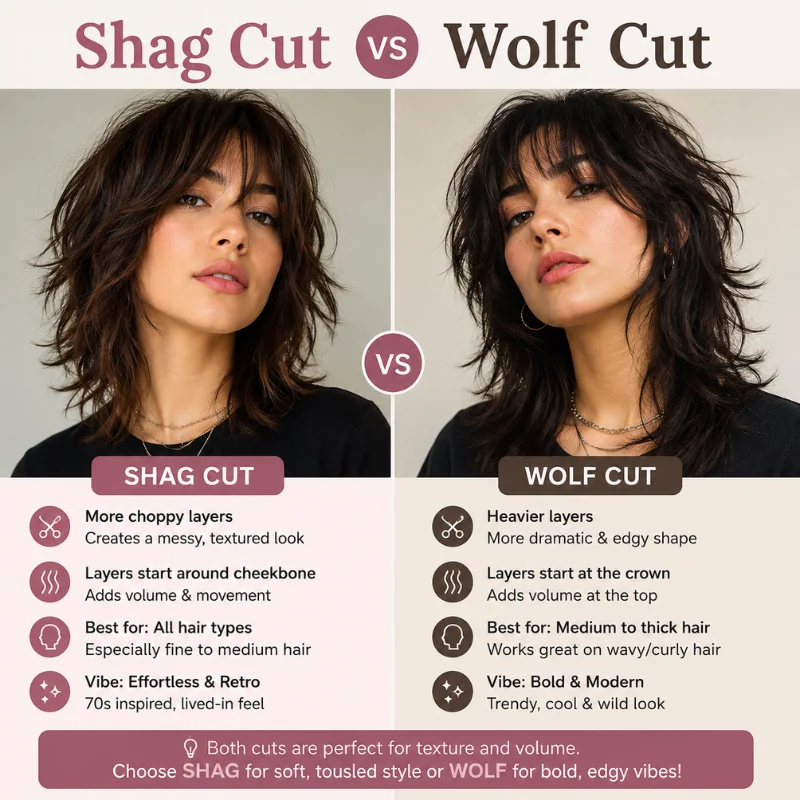
The butterfly cut features feathered ends and a seamless blend. It creates a feminine and elegant shape that cascades away from the face. The wolf cut is intentionally imperfect. It uses a razored texture and disconnected layers to build an edgy and rebellious silhouette. Think of the butterfly as polished luxury, and the wolf as effortless rock-and-roll energy.
Butterfly Cut vs Wolf Cut: Side by Side
Evaluating a butterfly cut vs wolf cut side by side, the structural contrast is obvious.
- The Front: The butterfly sweeps outward like wings to soften angular features. The wolf cut hugs the face with piecey, choppy layers.
- The Top: A wolf cut aggressively removes bulk to create massive crown volume. The butterfly keeps the crown relatively smooth.
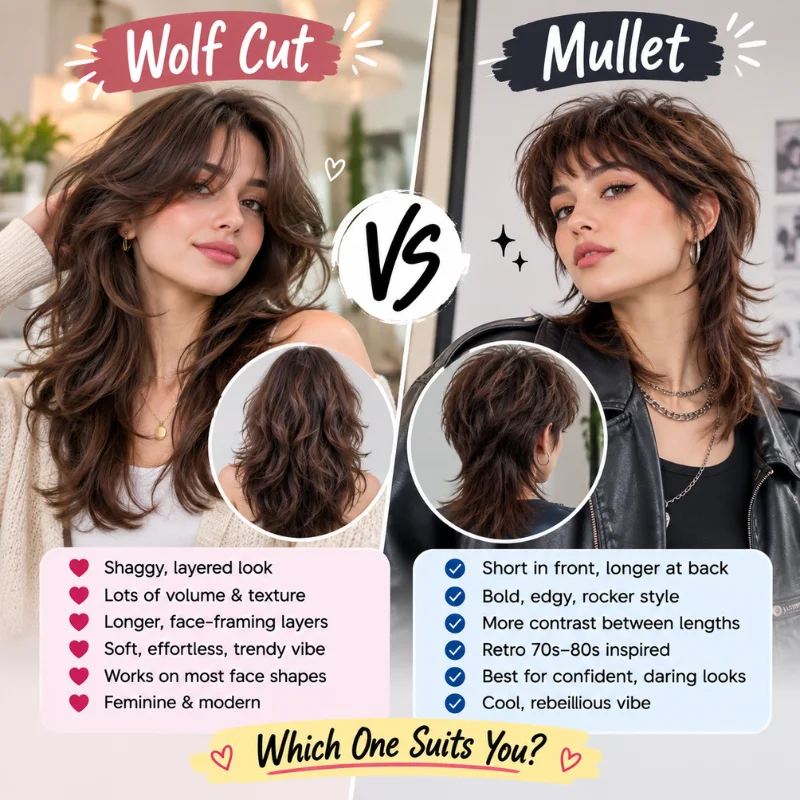
- The Back: A wolf cut back view reveals a mullet-inspired, highly textured cascade. The butterfly’s back view shows a smooth, U-shaped graduation of flowing layers.
Butterfly Cut vs Wolf Cut: Curly Hair
Natural curls completely change the behavior of these cuts.
For a butterfly cut vs wolf cut curly hair showdown, the wolf cut often wins. Curls thrive with the heavy weight removal of a wolf cut, preventing the dreaded “triangle head.” The butterfly cut can work on loose curls, but tight ringlets may struggle to show off those signature swooping face-framing layers without aggressive heat styling.
Butterfly Cut vs Wolf Cut: Straight Hair
If you have pin-straight hair, the butterfly cut requires a commitment to your round brush. Straight hair won’t hold that hair volume and bounce naturally.
The butterfly cut vs wolf cut dynamic flips here. A wolf cut on straight hair looks incredibly chic and piecey, especially if you rough it up with a good texturizing paste.
Butterfly Cut vs Wolf Cut: Long Hair
When comparing a butterfly cut vs wolf cut long hair style, consider your hair density. The butterfly cut preserves the illusion of long, thick hair because the bottom layers remain dense. A long wolf cut sacrifices bottom density for top volume, leaving the longest ends looking wispy and thin.
Which is Better for Fine Hair, a Wolf Cut or a Butterfly Cut?
This is where I see the biggest mistakes. If you have fine hair, choose the butterfly cut.
The delicate, wispy layers of a wolf cut remove too much weight. Fine hair ends up looking stringy instead of edgy. The butterfly cut uses strategic, graduated layers that actually create the illusion of thicker hair density.
What Face Shape is Best for a Butterfly Haircut?
The butterfly cut is a contouring magic trick. It is exceptionally flattering for a square jawline or a heart-shaped face. The rounded, bouncy layers hit right at the cheekbones and jaw, working to soften angular features and draw the eye upward.
Which Cut is More Flattering for a Round Face?
For a round face shape, the wolf cut is usually the stronger choice. The heavy crown volume elongates the face vertically, while the choppy, disconnected layers break up the roundness of the cheeks. It provides a sharp, structured contrast to soft facial contours.
Who Should Not Get a Butterfly Cut?
Do not get a butterfly cut if you are a strict “wash-and-go” person.
Mistakes I Made: I once thought I could air-dry my butterfly layers. I ended up with flat, awkward steps in my hair. This cut demands a round brush blowout or hot rollers to look like the reference photos. If you hate styling, skip it.
How Much Do You Want to Style It?
This is the ultimate dealbreaker.
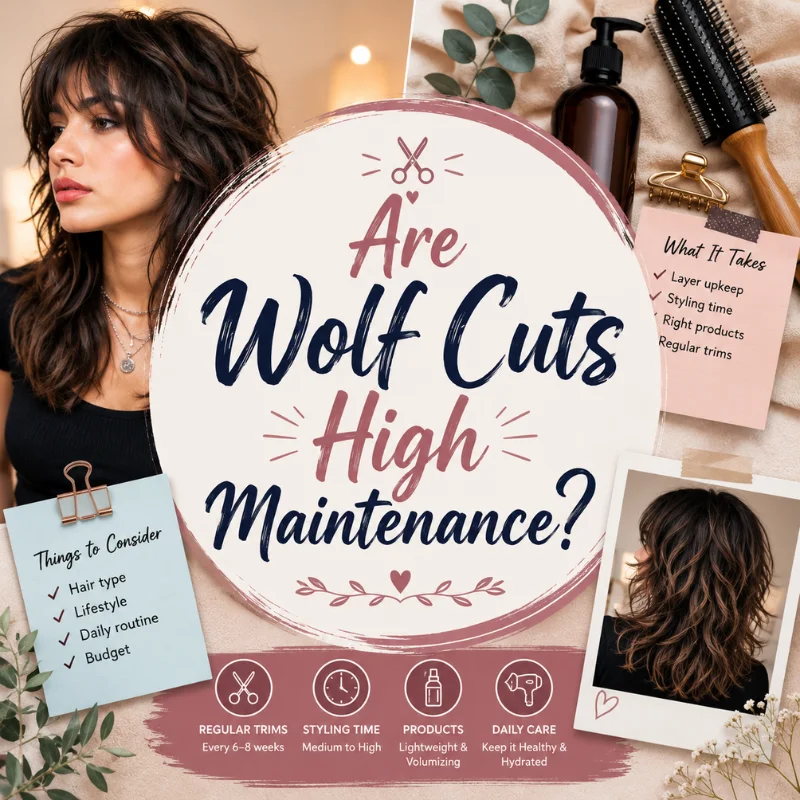
- Wolf Cut: Low-maintenance haircut. Thrives on air-dry styling. Spray some salt spray, scrunch, and walk out the door.
- Butterfly Cut: High maintenance. Demands a volumizing mousse and 15 minutes with a blow dryer to achieve that effortless chic look.
👉 Check Price: My favorite Sea Salt Texturizing Spray for instant wolf cut grip.
What Are the Disadvantages of a Butterfly Cut vs Wolf Cut?
The biggest disadvantage in any butterfly cut vs wolf cut scenario is the styling and upkeep trade-off. The butterfly cut falls flat instantly in humidity without its daily styling tax.
The main disadvantage of the wolf cut is the graceful grow-out phase or lack thereof. Because the layers are so disconnected, skipping your frequent trims will quickly leave you with an accidental 80s mullet.
Worried about crossing the line into mullet territory? Read our full breakdown on the Wolf Cut vs Mullet to see how to avoid the accidental 80s rockstar trap.
Can You Turn a Wolf Cut into a Butterfly Cut?
Yes, but it takes patience. Because a wolf cut has much shorter top layers and heavily thinned-out ends, you must let the shortest crown layers grow out for several months. Once they reach cheekbone length, a stylist can begin blending them into the seamless, feathered ends of a butterfly shape.
The Wolf Cut and Butterfly Cut Mix
Can’t decide? The butterfly and wolf cut mix (often called the butterfly wolf cut) is trending hard in 2026.
A wolf cut and butterfly mix takes the soft, sweeping face-framing layers of the butterfly and combines them with the messy, texturized crown of the wolf. It gives you blowout versatility in the front with lived-in texture in the back.
Short Butterfly Wolf Cut
A short butterfly wolf cut (hitting right at the collarbone) is arguably the coolest iteration of this trend. It removes the stringy ends often associated with long wolf cuts, leaving a punchy, voluminous bob-length shag that requires half the styling time.
Wolf Cut vs Butterfly Cut vs Hush Cut: Quick Comparison
| Feature | Wolf Cut | Butterfly Cut | Hush Cut |
| Overall Vibe | Edgy and rebellious | Feminine and elegant | Soft, airy, and minimal |
| Layering Style | Choppy, disconnected | Seamless, feathered | Lightweight, blended |
| Best For | Thick wavy hair | Fine to medium hair | Medium to thick hair |
| Styling Effort | Low (Air-dry) | High (Blowout needed) | Low to Medium |
| Face Framing | Heavy, jagged bangs | Swooping, bouncy wings | Wispy, translucent bangs |
Final Thoughts
The ultimate butterfly cut vs wolf cut decision depends entirely on your daily styling routine:
- Wolf Cut: Best for low-maintenance, edgy, air-dried texture.
- Butterfly Cut: Best for bouncy, glamorous, blow-dry volume.
Choose the layered haircut that perfectly fits your lifestyle!
FAQs
Is a butterfly haircut with wolf cut layers hard to maintain?
Not necessarily. Mixing the two creates a middle ground. You get the easy texture of the wolf cut with slightly longer, more manageable front pieces that require less precise heat styling.
Which is better for an oval face, wolf vs butterfly cut?
An oval face can pull off both flawlessly. Choose based on your hair texture and whether you prefer an effortless chic vibe (wolf) or a glamorous blowout (butterfly).
Does the butterfly cut make hair look thinner?
No, when done correctly on fine hair, it actually creates volume. However, if your stylist over-layers the bottom, it can thin out the ends.
How often do I need trims for a wolf cut back view to look good?
To maintain the specific modern shag shape and avoid a heavy, unstyled mullet, plan for salon upkeep every 6 to 8 weeks.
Can I achieve the butterfly look without hot tools?
Honestly, no. You can use heatless curlers overnight, but to get the true 90s supermodel blowout volume, you need tension and a smooth finish that only a round brush or rollers can provide.
What’s your current hair texture, and which cut are you leaning toward? Drop a comment below, and don’t forget to subscribe for more 2026 hair trend breakdowns!
Meet Ava
With over six years of hands-on expertise in nail care, lash artistry, and premium hair styling, I am dedicated to elevating beauty standards. Through my digital platform, NailBeautyZone, I analyze global beauty trends with a strict emphasis on product safety and hypoallergenic formulations.
My philosophy is uncompromising: if a product hasn’t been rigorously tested and personally trusted, it doesn’t earn my recommendation.



Leave a Reply